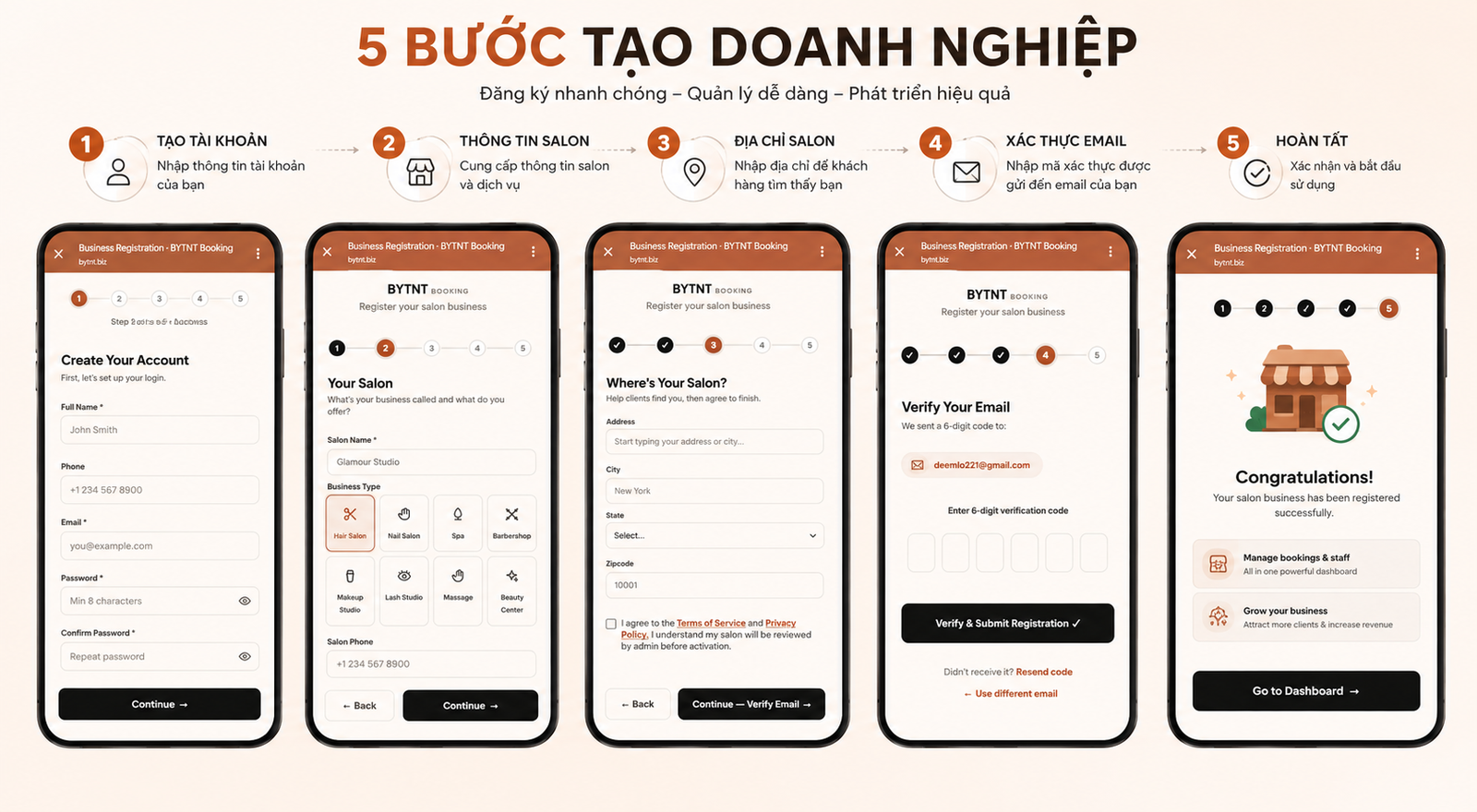
Building a business is not just about getting customers through the door. It is about creating a structure that can handle growth, keep daily operations organized, and deliver a consistent experience every time. Whether you run a salon, nail studio, spa, or barbershop, the right foundation makes it easier to manage bookings, appointments, staff, and reviews without constant chaos.
1. Define a clear business model
The first step is knowing exactly what your business offers, who it serves, and how it makes money. A clear business model helps you avoid wasted time and makes every decision easier, from pricing to staffing.
Focus on your ideal customer
Think about the type of client you want to attract. Do they value speed, premium service, convenience, or a relaxing experience? When you understand your audience, you can shape your services and booking process around their needs.
Map your core services
List the services that bring in the most value. For a salon or spa, this may include haircuts, coloring, facials, nails, or package deals. Keeping your menu simple at the start makes appointment scheduling easier and helps staff stay efficient.
2. Set up simple systems early
Many small businesses struggle not because of poor demand, but because they rely on memory, paper notes, or scattered messages. Systems create consistency, reduce mistakes, and save time as you grow.
Use online scheduling from day one
An online booking system lets clients reserve appointments anytime, even outside business hours. It also reduces back-and-forth messages and helps prevent double booking. For service businesses, this is one of the fastest ways to improve customer experience.
Organize staff and shifts
As your team grows, staff management becomes essential. A shared calendar with drag-and-drop scheduling helps you assign shifts, balance workloads, and adjust quickly when someone is unavailable. That flexibility keeps the business running smoothly.
- Track appointments in one place
- Assign staff based on service type and availability
- Reduce missed bookings and scheduling errors
- Make changes quickly when demand shifts
3. Build a strong customer experience
A great business does more than sell services. It creates a process that feels easy, professional, and reliable from the first booking to the final follow-up.
Make booking effortless
The easier it is to book, the more likely clients are to complete the appointment. Clear service descriptions, visible availability, and instant confirmation all improve conversion rates and reduce friction.
Automate follow-up and reviews
After the appointment, stay connected. Automated reminders, thank-you messages, and Google review requests help build trust and attract new clients. Positive reviews also strengthen your online reputation and make future booking decisions easier for customers.
4. Track numbers that matter
Growth becomes much easier when you understand what is working. Instead of guessing, review the numbers that show how your business is performing.
Monitor booking patterns
Look for your busiest days, most popular services, and peak hours. This information helps you schedule staff better, reduce idle time, and increase revenue opportunities.
Measure retention and repeat visits
Repeat customers are often the most profitable. Track how many clients return, how often they book, and which services lead to long-term loyalty. These insights can guide promotions and service improvements.
5. Create a plan for growth
Once your business is stable, you can start planning for expansion. Growth should be intentional, not rushed. The goal is to scale without losing quality or control.
Standardize daily operations
Write down your key workflows so that every team member follows the same process. This includes booking rules, cancellation policies, service steps, and customer communication standards.
Invest in tools that save time
The right platform can reduce admin work and give you more time to focus on customers. A system that combines appointment scheduling, staff management, and review automation can support growth without adding unnecessary complexity.
Final thoughts
Creating a business takes more than motivation. It requires clear direction, organized systems, and tools that support daily operations as you grow. By defining your model, setting up online scheduling, improving customer experience, tracking performance, and planning for scale, you build a business that is ready for the long term. If you want to simplify booking and manage your team more efficiently, try BYTNT.